Blog

  • Apple investor Warren Buffett Upgrades from a Foldable Phone to an iPhone

    Apple investor Warren Buffett Upgrades from a Foldable Phone to an iPhone

    According to the recent interview of Mr. Warren, he said that his foldable phone is permanently gone.

    Once a fan of the $ 20 Samsung SCH-U320, Buffett is now using the latest iPhone 11. Apple has long been a foldable phone user, although Apple is Berkshire Hathaway’s third-largest business. Behind of insurance and railways. Now, he said, the folding phone “is gone forever” even though he admitted that he primarily uses the iPhone for phone calls.

    “You are seeing an 89-year-old boy who is just beginning to do so,”. Buffett said although he does not use “all his facilities like most people.”

    “I use it as a telephone,” he said. Buffett said in the past that he uses an iPad to verify stock prices and investigate.

    Furthermore, the most talked-about Billionaire Warren Buffett is finally the proud owner of a smartphone iPhone. The 89-year-old business mogul, who by chance owns 5.6 percent of Apple’s shares. He told CNBC that he recently updated his Samsung Haven foldable phone to an iPhone 11.

    After using the folding phone as recently as 2019, Buffett notes that it has officially separated. While adopting smartphones, although he did not mention which iPhone 11 model he is using. “My folding phone is gone forever,” Buffett said.

    Buffett tells CNBC that he did not buy an iPhone, but was given away by “several of them” by numerous people, including Apple CEO Tim Cook, who has been trying to get Buffett to switch to an Apple-manufactured device during the minus a few. years. Cook even told Bloomberg TV in 2018 that he would personally fly to Omaha and provide technical support for Buffett if he ever needed it.

    Although Buffett finally changed, he says he is strictly using his iPhone to make phone calls. Buffett also owns an iPad and uses it primarily to conduct research and verify stock prices.

  • Samsung Starts Mass Production of Industry’s First 16GB LPDDR5 DRAM for Next-Generation Premium Smartphones

    Samsung Starts Mass Production of Industry’s First 16GB LPDDR5 DRAM for Next-Generation Premium Smartphones

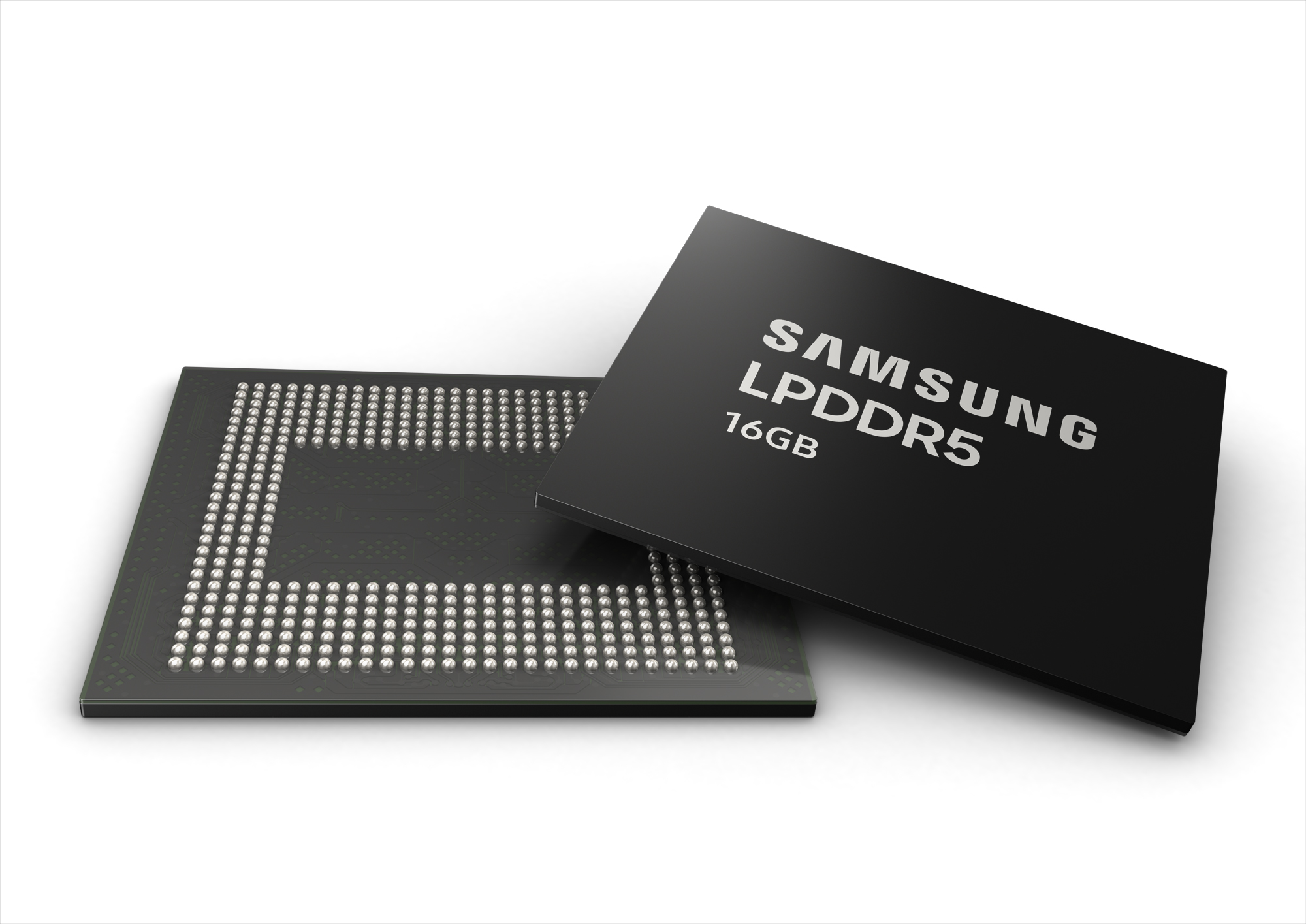
    Samsung Electronics, a world groundbreaker in advanced memory technology. Announced today that it has begun mass-producing the industry’s first 16-gigabyte (GB) LPDDR5 mobile DRAM package for next-generation premium smartphones.

    After mass production of the industry’s first 12 GB LPDDR5 in July 2019, the new 16 GB advance will lead the premium mobile memory market with additional capacity that allows enhanced 5G and AI features, including games with graphics and smart photography

    Furthermore, the statement which is as following “Samsung is committed to bringing memory technologies to the forefront to allow consumers to enjoy incredible experiences through their mobile devices. We are excited to stay true to that commitment to our new first-line mobile solution for global device manufacturers, “said Cheol Choi, senior vice president of memory sales and marketing at Samsung Electronics.” With the introduction of a new product line based in our next-generation process technology later this year, Samsung will be able to fully address the future memory demands of global customers.

    The data transfer rate for the 16 GB LPDDR5 reaches 5,500 megabits per second (Mb / s), approximately 1.3 times faster than the previous mobile memory (LPDDR4X, 4266Mb / s). Compared to an 8GB LPDDR4X package, the new mobile DRAM offers more than 20 percent energy savings while providing up to twice the capacity.

    In addition, Samsung’s 16 GB LPDDR5 mobile DRAM package consists of eight 12 gigabits (Gb) chips and four 8 Gb chips, which equip premium smartphones with twice the DRAM capability found in many laptops and PCs for high-end games today.

    Along with ultrafast performance, the industry’s largest capacity supports dynamic and responsive gaming, as well as ultra-high resolution graphics on premium smartphones for highly immersive mobile gaming experiences.

    As Samsung continues to expand LPDDR5 mobile DRAM production at its Pyeongtaek site, the company plans to mass-produce 16Gb LPDDR5 products based on 10nm (1z) class third generation process technology in the second half of this year, in line with the development of a 6,400Mb / s chipset. This relentless innovation is expected to position Samsung well to further consolidate its competitive advantage in markets such as premium mobile devices, high-end PCs and automotive applications

  • Pixel Launcher in Android 11 with new Apps Impression

    Pixel Launcher in Android 11 with new Apps Impression

    Google Pixel Launcher may not have as many functions as third-party alternatives such as Lawnchair, Nova Launcher or Action Launcher, but its simplicity and clean design have won many fans. The launcher comes pre-installed on Google Pixel devices and rarely receives updates. Usually, we see new features coming to the launcher when Google launches a new Pixel device or a major Android update.

    While the first preview for Android 11 developers did not bring any new Pixel Launcher features. However, we know that Google has been working on the launcher since we saw clues about a new “active seat” feature. Now, XDA senior member paphonb, one of the Lawnchair team developers and a veteran Pixel Launcher modifier, has discovered several other new features that might be coming to the Google startup application.

    In addition, the Paphonb modified the latest version of Pixel Launcher from Android 11 Developer Preview to show several features in development. These features include new actions in the overview of recent applications, the ability to hide suggestions from individual applications in the application drawer, and automatic naming of newly created folders.

    New Actions in Recent Apps Overview

    On Android 9 Pie, Google moved the code for the SystemUI recent application driver to Launcher3, which is the initiator of AOSP. In the process, Google also introduced higher quality recent application summary cards that were scrolling horizontally, a service that allows the user to select text and images from the summary cards (Pixel devices only) and a service that displays a row of Suggested applications below The summary card.

    Now on Android 11, Google is trying to replace the application suggestion row in the overview of recent applications with a set of 3 actions. These actions include “select”, “screenshot” and “share”. The “select” button did not work for paphonb, but we can guess what it does.

    It is likely to highlight all the text and images that can be selected on the summary card. As for the other two buttons, the screen capture button captures an image of the application that is in focus, while the share button captures a screen capture and then opens the share menu so you can quickly share it.

    Hiding Individual App Suggestions

    Paphonb modified the latest version of Pixel Launcher from Android 11 Developer Preview to show several features in development. These features include new actions in the overview of recent applications, the ability to hide suggestions from individual applications in the application drawer, and automatic naming of newly created folders.

    The suggested row of Google applications is based on recent applications that you have opened most frequently. While it is possible to hide this row completely by going to the Suggestions submenu in the Pixel Launcher configuration, it is not possible to prevent certain applications from appearing in this row.

    However, that could change soon. Paphonb shared a screenshot that shows a new “do not suggest application” action by long-pressing the icon of any application in the row of suggested applications. This action currently does not work, but it is clear what it would do.

    Auto Name Folders

    Pixel Launcher will soon be able to automatically provide a name for the newly created folders that you create by dragging and dropping the icon of one application over another. Currently, you can name folders manually by touching the “unnamed” text at the bottom of the folder, but Google can save you a little effort by detecting what type of applications you are grouping.

    For example, in the following video, paphonb showed that Pixel Launcher automatically names a newly created “Communication” folder when grouping messages and Gmail. He also showed it by naming a newly created folder as “Social” when he joined Telegram and Facebook.

  • Microsoft Launches 100X100X100 Program for B2B Companies

    Great news as 100 companies will commit $ 100,000 each for company-ready solutions from 100 new SaaS companies. As strengthening its commitment to accelerate the startup ecosystem in India, Microsoft today launched the 100X100X100 program for B2B SaaS startups in India.

    This initiative will bring together 100 committed companies and 100 new early growth companies that have solutions ready for the company to offer. Each participating company will commit to spending $ 100,000 over an 18-month course on solutions provided by the SaaS company, and more than 50 new companies are part of the program at the launch.

    “India has one of the largest B2B SaaS startup ecosystems in the world and is growing exponentially. This initiative will help build scale and create incredible opportunities for new businesses. Companies can now accelerate their digital travel through the easy adoption of enterprise-level solutions. We are excited to see the results of these partnerships, “said Anant Maheshwari, president of Microsoft India, in a statement.

    Launched under the auspices of Microsoft for Start-ups, the 100X100X100 program will help companies accelerate their digital transformation through the faster adoption of SaaS solutions. It will make available a variety of curated, ready-to-launch, enterprise-level solutions from new companies with a proven track record. At the same time, it will aim to create a profitable domestic market for the fast-growing Indian B2B B2B SaaS startup segment by increasing its revenue and its customer base.

    The initiative is open to new Microsoft-enabled co-sale companies associated with Microsoft India with the Start-ups initiative. As part of the program, these new companies will also have access to regular quick hiring sessions with potential clients in the Microsoft industry and customer events. The program will be carried out with the support of ecosystem partners and industry associations, including the Delhi and Mumbai chapters of The Indus Entrepreneurs (TiE).

    Microsoft has evolved its “partnership with society” approach, both technical and commercial, guiding new companies at each stage of growth. This includes providing them with Microsoft’s technology platform, which allows them to innovate and build on their own terms, Azure credits (cloud offer), provide comprehensive training programs and technical support to ensure competitiveness.

    It provides the mentoring, deep technical experience and an immersive experience in the industry focused on business results, offered at Microsoft and industry startup events. It helps new companies connect with the right players that can accelerate their development, including accelerators, incubators, and VCs, and supports the rationalization of marketing activities (GTM) worldwide.

    The Microsoft ScaleUp program, under the Microsoft for Start-ups initiative, is designed for new companies in the A-C Series. Through its experience in technology, an ecosystem of growing partners and an M12 risk fund, the company says it is uniquely positioned to help new businesses evolve from being ready for companies to market.

  • There’s Now a Coronavirus Mask That Works with Face ID

    There’s Now a Coronavirus Mask That Works with Face ID

    As we know that coronavirus is a threat to us and wearing a protecting mask is a must nowadays. The demand for protective face masks has been really high since COVID-19, aka the new coronavirus, started hitting the news. So much so, in fact, that dentists can’t get hold of the ones they need to do their jobs.

    The upsurge in people wearing masks has led to some interesting new social problems, like the fact that you can’t unlock your iPhone using Face ID if you’ve got a mask over half your face.

    As ever, though, there’s a designer/artist type ready to solve this for you with the satirical products. Behold Resting Risk Face, by Danielle Baskin.

    You can tell it’s satirical by the fact that a) it’s not actually available to buy (ostensibly until the global mask shortage is over, but when that happens it’ll probably be because the health scare is also over) and b) the website contains sentences like “If you enjoy late-stage capitalism, facial recognition respirator masks will retail for $40 [£31] per mask.”

    You can say that it is satirical because

    a) is not really available to buy (apparently until the global shortage of masks is over, but when that happens, it is probably because the health problem is over)

    b) Website contains sentences such as “If you like late-stage capitalism, facial recognition respirator masks will sell for $ 40 [£ 31] per mask.”

    How does it work?

    After loading your face, we use computational mapping to convert your facial features into an image printed on the surface of N95 surgical masks without distortion. Our printer uses inks made from natural dyes. It is not toxic and does not affect breathability.

    You can use your mask for everyday life as a barrier to air droplets. However, you will have to add it as an additional face in Face ID: Apple’s technology is too good to be fooled only by the mask.

    If you wonder if this meaningless mask is a coil load, this is what WHO has to say: If you are healthy, you only need to wear a mask if you are caring for a person with the suspected 2019-nCoV infection. Wear a mask if you are coughing or sneezing. The masks are effective only when used in combination with frequent hand cleaning with alcohol or water and soap-based hand sanitizer. If you wear a mask, you should know how to use it and dispose of it properly.

  • Launch of Black Shark 3 scheduled for March 3rd

    Launch of Black Shark 3 scheduled for March 3rd

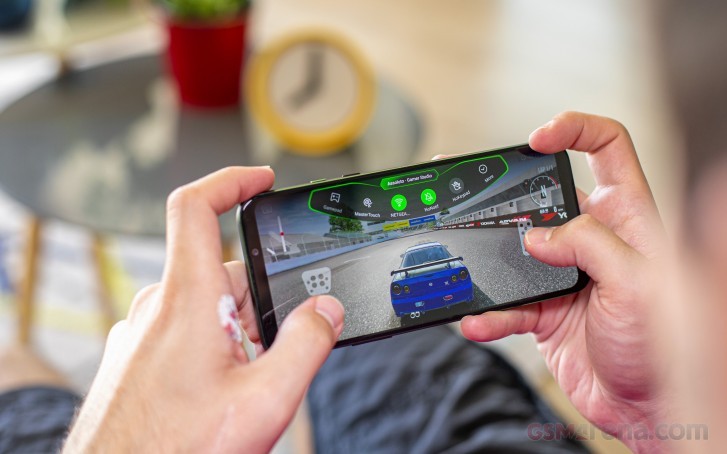
    The next Black Shark gaming phone will arrive on March 3. The company is ready to bring its first 5G compatible device: The Black Shark 3

    The phone will come with the Snapdragon 865 paired with up to 16 GB of RAM and a 120 Hz QHD screen. In addition, we expect to see a 5,000 mAh battery with a fast charge of 65W.

    The Black Shark 3 5G gaming phone will be official on March 3, it has been confirmed. The device will be announced in China during an online-only event.

    Black Shark actually announced a partnership with Tencent last month. Reports suggest that either the phone will bear the name ‘Tencent’ in its name, or Black Shark plans to launch a special edition variant of this phone with the Tencent brand. We’ll see.

    Black Shark claims that this phone will become the first 5G smartphone focused on games. That is possible unless something unforeseen happens before this phone arrives.

    We still don’t know what the phone will look like, but we do know that it will have a 120Hz screen. Some images on the screen of this phone appeared recently, revealing refresh rate options of 60Hz, 90Hz and 120Hz.

    The device will surely have a full HD + 120Hz screen, although Black Shark can opt for a QHD + panel. The Snapdragon 865 will power this smartphone, that’s for sure. Geekbench’s phone list confirmed that, and that was to be expected. That same list also confirmed 12 GB of RAM for this phone.

    The Black Shark 3 5G will also include a 5,000 mAh battery when it lands on March 3. That battery will support a fast 65W cable charge.

    This smartphone can be recharged from 0 to 100 percent in less than 38 minutes thanks to such a fast charge. It is also claimed that it can do more than 800 full charge cycles without damaging the battery.

    The device will also ship with Android 10. Now, the device will also ship with Android 10. That is also something Geekbench confirmed. Geekbench also shared single-core and multi-core benchmarking results, but they are far, not even close to what the real unit can offer.

  • OPPO Find X2 with Snapdragon 865 chipset, 120Hz screen to break the cover in MWC 2020

    OPPO Find X2 with Snapdragon 865 chipset, 120Hz screen to break the cover in MWC 2020

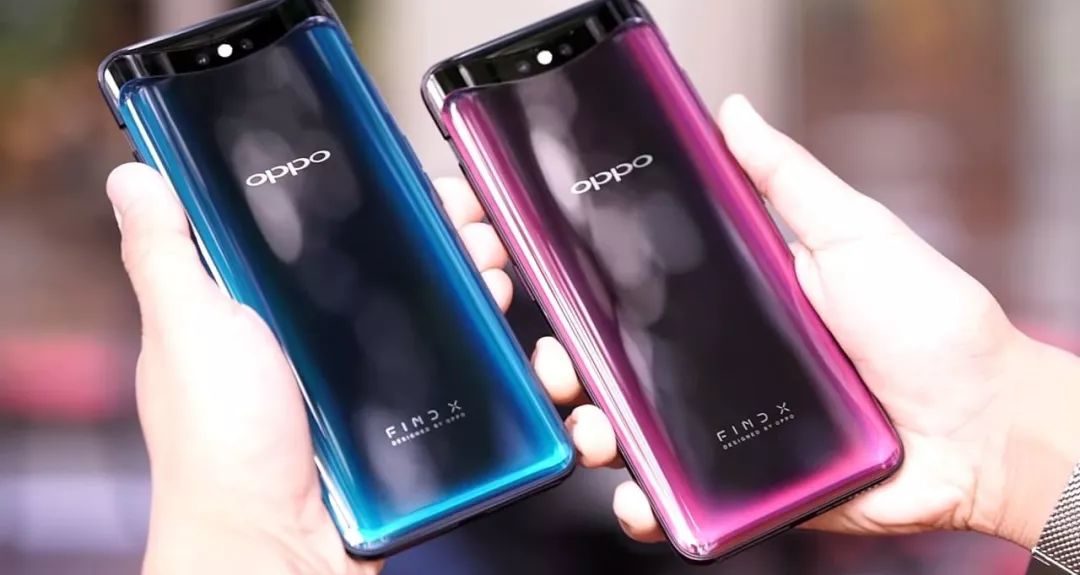
    Chinese smartphone maker Oppo has formally accredited the Find X2, which can change to the heir of the Find X machine he launched last year. The new machine may have more digicam {hardware} and display options than before.

    Furthermore, Oppo Find X was launched to its customers in June of last year with a notched design due to its sliding mechanism. The company did not present any rationalization for its successor, one of the modern telephones of its time.

    The company finally made this announcement and confirmed that Oppo Find X2 will be launched within the first quarter of the following year. Identical to Oppo Find X, the new cell phone will attract consideration with its highly effective {hardware} and digital camera efficiency.

    The highly anticipated successor of OPPO Find X will finally be launch at MWC 2020 this month. OPPO has begun to send invitations (through GSMArena) to its MWC launch event, which will begin at 2:00 PM on February 22 at the Auditori Fòrum CCIB in Barcelona.

    As confirmed by the company, the Find X2 will be your first phone to offer the Snapdragon 865 processor. In addition to the fast chipset, it is confirmed that OPPO Find X2 comes with a 120Hz QHD + OLED display panel, coming from Samsung. While the phone’s screen size has not yet been officially confirmed, a recent leak said the phone will have a 6.5-inch screen with curved edges.

    Rumors also suggest that Find X2 will be the first phone to use Sony’s new 48MP IMX689 sensor, which features omnidirectional PDAF technology for faster focus. It is also expected to offer a fast 65W cable charge, as was the Reno Ace that the company had launched in October last year.

    The original Find X, which launched in June 2018, was one of the first flagship Android phones to feature a motorized pop-up camera. It remains to be seen if the Find X2 will have a pop-up camera similar to its predecessor.

  • Samsung joins Ericsson and Nokia as 5G providers for US cell phones

    Samsung joins Ericsson and Nokia as 5G providers for US cell phones

    U.S. Cellular has granted Samsung Electronics a commercial agreement to provide LTE and 5G network solutions.

    According to the recent statement from Samsung. The new agreement sets out the terms under which US Cellular may purchase Samsung’s commercially proven network solutions. While including 5G New Radio (NR) technology, to assist U.S. Cellular to offer the next-generation service.

    Furthermore, “We are excited to work with Samsung to extend the innovative 4G LTE and 5G technology to our customers, expanding what is possible in consumer experiences and commercial applications,” said Mike Irizarry, EVP, and CEO of US Cellular, in a press introduction.

    Last year, US Cellular, the fifth-largest mobile phone operator in the US. The US announced that it would launch the 5G service in Iowa and Wisconsin during the first part of 2020. It took advantage of Ericsson and Nokia equipment providers for network updates and 5G implementation efforts, including 5G New Radio hardware and software (NR).

    Samsung has established a name in the US infrastructure market. UU., Winning 5G network supply offers with companies such as Verizon, AT&T, and Sprint. T-Mobile has tested some of its equipment but has not made any announcement about adding Samsung to its list of suppliers.

    “We look forward to this new collaboration with U.S. Cellular, a key mobile service provider for millions of customers across the United States,” said Mark Louison, senior vice president and general manager of the Samsung Electronics America Network Division.

    “As our latest network solutions become a larger part of the US market, we are excited to advance Samsung’s 5G innovation and leadership, and continue our journey in delivering new communications technologies, including 4G LTE and 5G “.

    Furthermore, Louison added that Samsung focuses on improving mobile networks worldwide by providing global operators with the best solutions in their class and applying experience gained from regional implementations in India, Japan, Korea, the United States, and other markets.

  • Google is Indexing WhatsApp Group Chat links, which Makes Even Private Groups Recognizable

    Google is Indexing WhatsApp Group Chat links, which Makes Even Private Groups Recognizable

    Google is indexing requests to WhatsApp group chats. While it makes invitation links, including links to private group chats, identifiable and available to anyone who wants to join, Motherboard reports.

    Furthermore, the journalist Jordan Wildon said on Twitter that he discovered that the “Invite to group link” feature of WhatsApp allows Google to index groups. Since making them available on the Internet as links are shared outside the secure private messaging service of WhatsApp.

    While Motherboard was able to find private groups using specific Google searches (and the results included many groups to share porn). Once they joined a group, aimed at NGOs accredited by the UN, they had access to all participants and their phone numbers.

    The Group administrators can invalidate a link to a chat if they wish, but Wildon says he discovered that, in those situations. WhatsApp only generates a new link; It does not necessarily disable the original link. WhatsApp group links come with attached warnings, reminding the person who generates the link only to share it with people you trust.

    In addition, Facebook’s WhatsApp spokeswoman Alison Bonny said in an email to The Verge that “like all content that is shared on public search channels, other WhatsApp users can find invitation links that are published on the Internet,” and He added that “links that users wish to share privately with people they know and trust should not be published on a publicly accessible website.”

    Whereas Google decayed to provide comments on the record, but Danny Sullivan, the company’s public search link. He also tweeted that “search engines like Google and others list pages on the open web. That’s what is happening here. No is unlike any case where a site allows URLs to be publicly listed. ” It included a link to instructions in the Google Help Center to prevent content from being included in search results.

    WhatsApp, of course, has had its share of security-related headaches in recent months. An alleged Saudi Arabian hack on Amazon CEO Jeff Bezos’s phone in 2018 was reportedly carried out through a WhatsApp message infected with malware. Last May, a vulnerability discovered in the application was being used to inject spyware into Android and iOS phones through a phone call.

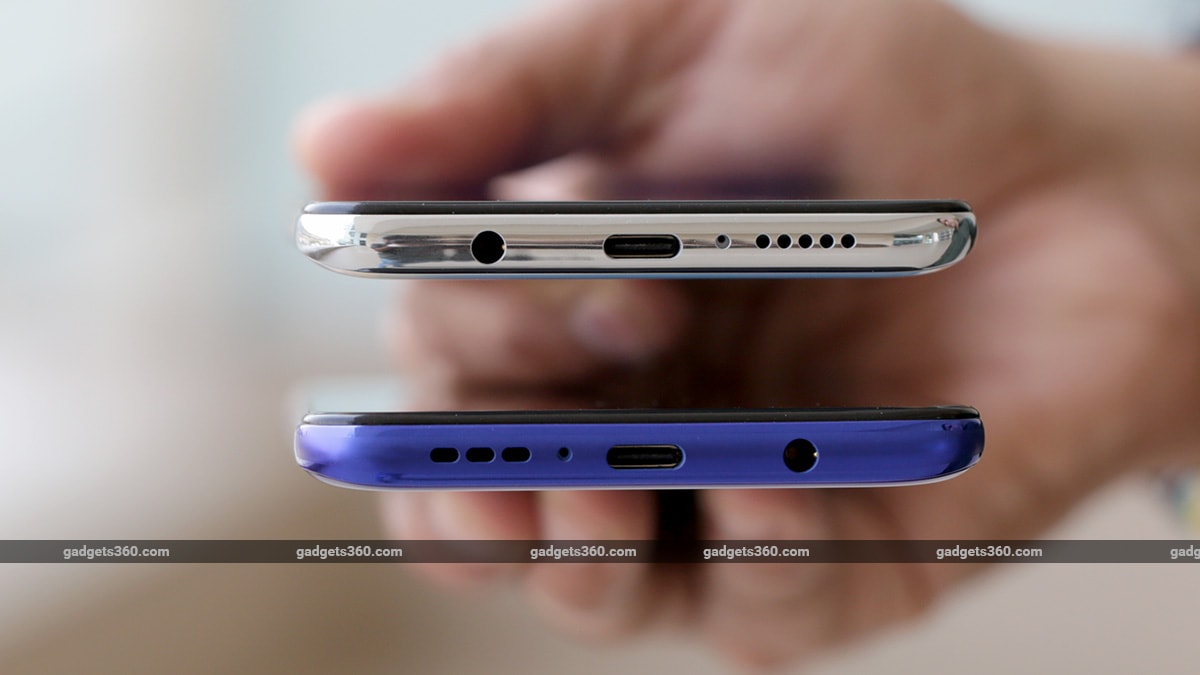
  • Poco X2 vs Redmi Note 8 Pro: Which 64-megapixel Smartphone is Better

    Poco X2 vs Redmi Note 8 Pro: Which 64-megapixel Smartphone is Better

    Recently, the these two amazing smartphones launched in the market. Poco X2 with the Realme X2 and it was a beautiful neck to neck battle in which we found that the Poco X2 offers a slightly better overall package. When it comes to especially due to its price. According to the reviews, it is time to face Poco X2 against a rival from his own territory, which is even more affordable: the Redmi Note 8 Pro. If you are confused between these two phones here’s our comparison chart.

    While, equipped with a powerful processor, impressive camera specifications, a large battery, and a premium design, the Redmi Note 8 Pro offers a lot for the money,.On paper, the Redmi Note 8 Pro seems pretty even with its cousin, but is it the best purchase or does it make sense to pay a premium for the Poco X2? Let’s find out.

    Poco X2 vs Redmi Note 8 Pro prices and variants

    The Poco X2 with 6 GB of RAM and 64 GB of storage. The following variant doubles storage with the same amount of RAM and the high-end variant offers 8 GB of RAM and 256 GB of storage in Rs. 19,999. These are very good prices for what is offered.

    The Redmi Note 8 Pro also comes in three variants, but they are all priced lower than Poco’s offers. The Redmi Note 8 Pro starts at Rs. 13,999 for 6GB of RAM and 64GB of storage; going up to Rs. 15,999 for 6 GB of RAM and 128 GB of storage, and Rs. 17,999 for 8GB of RAM and 128GB of storage. The high-end version of the Note 8 Pro does not have as much storage as the X2, but you can use a microSD card.

    The Redmi Note 8 Pro is clearly more affordable than the Poco X2, in all variants, and is also easier to buy, thanks to the limited supplies of the Poco X2 shortly after its launch, resulting in a flash sales period. However, there is a reason why the Little X2 costs a little more, which we will see in a moment.

    Poco X2 vs Redmi Note 8 Pro design and style

    As both smartphones have a very good build quality and look very elegant. The Redmi Note 8 Pro comes in a more sober choice of colors, while the Poco X2 comes in brighter and more striking finishes. The glass backs on both phones are scratch resistant, which increases the feeling of quality. Both have similar weights and thicknesses, although the Redmi Note 8 Pro is a bit lighter.

    Poco X2 vs Redmi Note 8 Pro performance and games

    The Redmi Note 8 Pro works with MediaTek Helio G90T, a powerful game-oriented SoC. The Poco X2 uses Qualcomm Snapdragon 730G, which is the same as the Realme X2. Both are eight-core processors, but Qualcomm’s offer is based on the new 8 nm manufacturing process, compared to the 12 nm process for the Helio G90T. On paper, this should make it more energy-efficient.

    Both processors are more than capable of handling everyday tasks, and with normal use, we do not notice any stuttering or delay in the interface or when performing multiple tasks on any of the phones. We tested the usual games like PUBG Mobile and Asphalt 9: Legends on both phones and these games worked very well. The Redmi Note 8 Pro was able to run both games with high graphic quality, but after about 20 minutes of play, we noticed that the phone got quite hot. The Poco X2 also warmed up a little after the same amount of time, but not as much as the Redmi.

    The Final Verdict

    It was a close fight between the Poco X2 and the Redmi Note 8 Pro but between the two, we feel that the Poco X2 is worth the premium it guidelines. For the extra money, you get fewer ads in MIUI, a smoother display, and more capable cameras for shooting video. The Poco X2 is a little bulkier than the Redmi Note 8 Pro and it only comes in flashy color trims, but other than this, there’s little to complain about.

    The Redmi Note 8 Pro has long been our go-to recommendation in this segment, and even now, the base variant is still one of the best phones you can buy for under Rs. 15,000. However, when it comes to the higher-end variants, the Poco X2 offers better value for just a bit more money.